
Quick answer
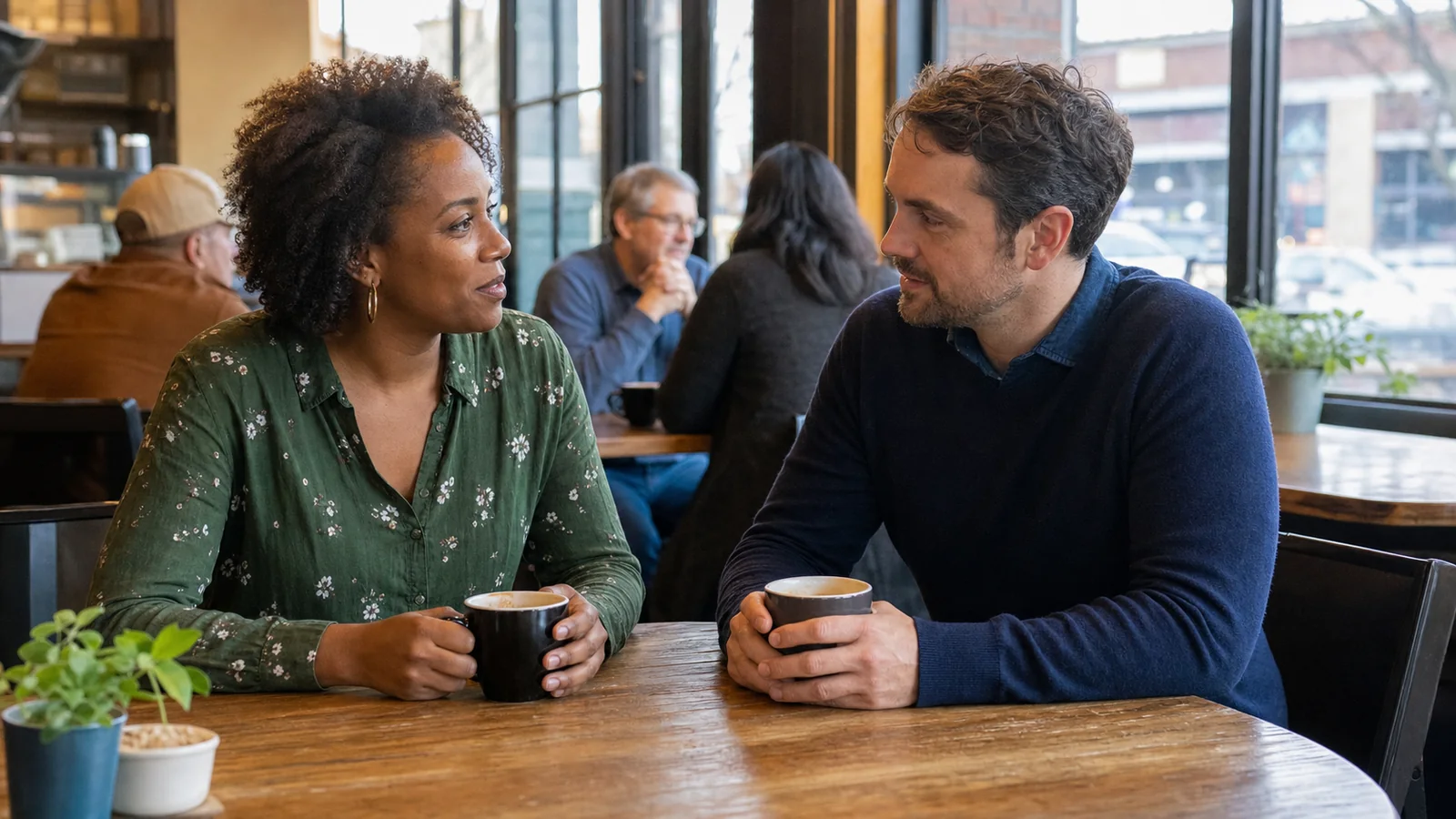
Your first date after herpes diagnosis should be simple, public, and easy to leave. Choose a familiar place, arrange your own transportation, limit the date to about an hour, and decide your physical boundaries beforehand. The goal is not to disclose perfectly or win approval; it is to learn whether conversation, respect, and attraction feel mutual.
You usually do not have to discuss HSV on the first date unless sexual activity may happen or you genuinely want to share. Stay curious about the other person, notice how they handle boundaries, and remember that you are evaluating compatibility too.
Let the first date be smaller than the diagnosis
Replace the test with one useful question
After an HSV diagnosis, an ordinary coffee can start to feel like a referendum on your entire romantic future. You may watch every expression for rejection, rehearse a disclosure while the other person is talking, or assume the date only counts if it leads somewhere. That pressure makes it difficult to notice whether you even like them.
Give the date a smaller job: Do I want another conversation with this person? You do not need to decide whether they could accept HSV, become a partner, or fit into your life long term. A first meeting provides limited information. Look for enough comfort, curiosity, and mutual effort to justify a second one.
Meeting online can lead to meaningful relationships. Pew Research Center found that one in ten partnered U.S. adults first met their current spouse or partner on a dating site or app. The statistic does not promise an outcome from any single date. It is a reminder that an online introduction can become a real relationship through many ordinary steps.
If you have not reached the meeting stage yet, our herpes dating profile guide explains how to write a genuine bio, choose photos, protect private details, and start conversations that can move naturally toward a date.
How to prepare for a first date after herpes diagnosis
Choose a low-pressure setting
Coffee, lunch, a bookstore café, or a walk in a populated park keeps the focus on conversation and offers a natural ending. Choose somewhere you already understand: parking, noise level, restrooms, and travel time. Familiar logistics leave more attention for the person rather than the plan.
A 60- to 90-minute date is long enough to learn something and short enough to feel manageable. You can extend it if you both want to, but do not design an entire afternoon around someone you have never met. Avoid your home, their home, isolated trails, or a location where leaving would depend on your date.
RAINN’s current safer-dating guidance recommends meeting in a busy public place, telling someone your plans, and keeping control of your own transportation. These precautions apply to every first date. A shared health experience or a verification badge does not establish trust by itself.
Before-you-go checklist
- Confirm the time and public location on the day of the date.
- Tell a friend who you are meeting and when you expect to finish.
- Arrange your own ride and keep enough charge on your phone.
- Choose an outfit you already know feels comfortable.
- Decide how much alcohol, if any, fits your boundaries.
- Plan the latest time you want to leave.
- Prepare one sentence for ending the date if you feel uncomfortable.
Decide your boundaries before attraction changes the plan
Think through physical affection, going to a second location, sharing your home address, and discussing HSV before you arrive. A boundary decided in a calm room is easier to remember when the date feels exciting. You can always choose less contact in the moment. You never owe more because someone bought dinner, traveled farther, or responded warmly to your profile.
| Moment | Possible boundary | Words you can use |
|---|---|---|
| They suggest going home together | Keep the first meeting public | “I am enjoying this, but I am heading home on my own tonight.” |
| They ask for your address | Keep home details private | “I am nearby, but I keep my address private until I know someone better.” |
| Conversation turns sexual | Slow the pace | “I am open to talking about that, just not this early.” |
| You feel uncomfortable | Leave without negotiating | “I am going to end the evening here. Take care.” |
For a broader plan covering photos, location data, blocking, reporting, and first meetings, review our dating privacy and safety guide.
Stay in the conversation instead of watching yourself
Use questions that reveal everyday compatibility
A first date does not need a clever interview script. Ask about the details that affect real life: how they spend weekends, what relationships with friends and family look like, what they are making room for this year, and what kind of relationship they want. Follow an interesting answer instead of rushing to the next prepared question.
Offer stories rather than a list of facts. Instead of saying you like travel, describe the weekend trip that went wrong in a funny way. Instead of announcing that family matters, share the Sunday ritual you protect. Specific stories create warmth and give the other person something genuine to respond to.
Try the two-way test
Notice whether curiosity moves in both directions. Do they ask follow-up questions? Do they remember something from your messages? Can they disagree without becoming dismissive? Attraction matters, but the way a person handles ordinary conversation often predicts whether a vulnerable discussion could feel safe later.
Read behavior, not imagined approval
It is easy to spend the entire date asking internally, “Do they like me?” Replace that with three observations: How do I feel around them? Do their actions match their words? Is respect present when I set a small boundary? These questions return your attention to information you can actually use.
| Encouraging signs | Reasons to slow down or leave |
|---|---|
| They listen without interrupting every answer | They push past a clear no or make you defend it |
| They are consistent with their profile and messages | Basic details change in ways they cannot explain |
| They are respectful to staff and people nearby | They mock former partners or disclose other people’s private information |
| They accept the pace of the date | They pressure you to drink, move locations, or share an address |
| You can be relaxed without performing | You feel responsible for managing their mood |
Do you need to disclose HSV on the first date?
Timing should protect informed choice, not create a performance
A first date may be too early if you are still deciding whether you want a second meeting. You are allowed to keep personal health information private while there is no plan for sexual activity. You should not wait until intimacy is already happening, when both people may feel rushed or pressured.
The American Sexual Health Association notes that there is no single date-number rule and that disclosure does not necessarily have to happen on the first date, but should happen before sexual activity, once some trust has developed. That approach leaves room for privacy and informed decision-making at the same time.
HSV is also far more common than stigma suggests. CDC treatment guidance estimates that 11.9% of people ages 14 to 49 in the United States have HSV-2. A population estimate cannot answer questions about your diagnosis, symptoms, treatment, or individual transmission risk. Bring those questions to a qualified healthcare professional so you can speak accurately.
If you choose to mention it
You do not need a long speech. Keep the opening calm and leave room for a response:
“I like getting to know you, and I want to share something personal before this becomes physical. I have HSV. I manage it, and I am happy to talk about what it means and answer what I can.”
Then pause. Do not fill the silence with apologies, promises of zero risk, or every statistic you have read. A thoughtful person may need time or reliable information. Our complete guide to telling someone you have herpes covers preparation, wording, questions, and different responses.
If you are not ready
Keep the date within the boundary you planned. You can say, “I take sexual health seriously, and I prefer to discuss private details once I know someone better. I am not going home together tonight.” Privacy is not dishonesty when you are also preventing the situation from moving past the point where disclosure is needed.
End the date with clarity, not a verdict
If you want to meet again
You can be direct without deciding the future: “I had a good time and would like to see you again.” If the feeling seems mutual, suggest a simple second date. There is no advantage in pretending to be indifferent when you are interested.
If you are unsure
Thank them and give yourself time. Attraction sometimes grows after the pressure of the first meeting passes. Ask whether you felt safe, curious, and respected—not whether the conversation was flawless. One more date can provide clarity, but you do not owe a second meeting because there were no obvious problems.
If you do not want another date
Keep it short and kind: “Thank you for meeting me. I did not feel the connection I am looking for, but I wish you well.” You do not need to debate compatibility. If the person was threatening, coercive, or ignored boundaries, prioritize safety, block them, and use the platform’s reporting tools.
Review what happened before you review yourself
Separate facts from the old fear
Afterward, your mind may replay pauses, wording, or small expressions. Write down what actually happened before interpreting it. Did you enjoy the conversation? Did they ask questions? Were your boundaries respected? Did you want the date to continue? Facts reduce the chance that HSV anxiety will rewrite a neutral evening as failure.
A five-minute debrief
- Name one moment that felt natural.
- Name one thing you learned about the other person.
- Notice one boundary they respected—or did not.
- Ask whether your interest is based on the person, not relief at being liked.
- Choose one next action: invite, decline, wait, block, or report.
If the date went poorly, do not turn one meeting into a forecast. A mismatch can be disappointing without confirming your worst belief. If the experience exposed how much shame is still controlling your choices, return to smaller steps in our guide to rebuilding dating confidence after HSV.
Common first-date traps after an HSV diagnosis
Accepting anyone who seems accepting
A person’s comfort with HSV does not automatically make them compatible or safe. Shared status can make one conversation easier, but it does not replace kindness, reliability, attraction, goals, or respect. Keep the standards you had before diagnosis—and improve them where experience has taught you to.
Disclosing early only to stop the anxiety
Immediate disclosure can be right when it reflects your values or the context of the platform. It is less useful when it is an attempt to force certainty from a stranger. Ask whether sharing now supports trust and informed choice, or whether it simply asks the other person to calm a fear you have not had time to understand.
Letting chemistry erase the plan
A strong connection can make boundaries feel unnecessary in the moment. They are still useful. Keep control of transportation, do not move to a private location before you are ready, and do not postpone a needed sexual-health conversation because the evening feels promising.
Grading the date by whether you were chosen
A successful date is not only one that produces a second invitation. It may show you that you can meet someone, stay present, protect your privacy, and leave with your self-respect intact. Those are repeatable skills. Approval from one person is not.
Frequently asked questions
Questions about dating again after HSV
Do I have to disclose herpes on the first date?
Not necessarily. A first date can simply be a chance to decide whether you want another meeting. Plan to disclose before sexual activity and before the situation becomes pressured. If you know intimacy may happen soon, choose a private, unhurried time for the conversation.
What if my date asks about sexual health right away?
You can answer honestly if you feel ready. You can also say, “I take sexual health seriously, and I prefer to discuss personal details privately once I know someone better.” If you delay specifics, keep physical boundaries consistent with that choice.
Should I cancel a date if I am anxious?
Nervousness alone does not mean you are unready. Make the date shorter, choose a familiar location, or arrange a check-in with a friend. Reschedule if anxiety is so strong that you cannot stay present, make decisions, or protect your boundaries.
Can I kiss on a first date if I have genital herpes?
Genital and oral HSV involve different sites, and individual circumstances vary. Ask a qualified healthcare professional about your diagnosis and transmission questions rather than relying on general dating advice. Do not assume another person’s status based on appearance or symptoms.
How long should a first date last?
There is no fixed rule, but planning about 60 to 90 minutes can reduce pressure. If the date is going well, you can extend it. If it is not, the planned ending provides a natural way to leave without a long explanation.
What should I text after the date?
If you want another date, say so clearly and mention one moment you enjoyed: “I had a good time talking about our terrible travel stories. I would like to see you again.” If you do not, a short respectful message is enough when direct contact feels safe.
Your next date does not need to carry your whole future
A first date after herpes diagnosis can feel important because it represents movement. Let it represent only that. Choose a safe, manageable plan; bring curiosity instead of a performance; share personal information at a responsible pace; and pay attention to how the other person treats you.
Confidence grows when you can be honest, protect your boundaries, and still let an ordinary conversation surprise you. Whether this date becomes a relationship, a useful lesson, or simply one pleasant coffee, it can be one real step back into the life you want.
This article provides general dating, communication, privacy, and safety information. It does not replace personalized medical or legal advice. Ask a qualified healthcare professional about your diagnosis, symptoms, treatment, and individual transmission risk.
Meet someone who already understands HSV
Start with shared context, move at your own pace, and focus on the conversation and compatibility that make a real date worth having.
Join the Community →